2025 2026 Bathroom Design Trends. A Kinder, Warmer Home.
Time at home is priceless and great design shouldn’t have to be.
This presentation curates the trends I believe are worth inviting into everyday life: warm, grounded palettes; soft, rounded forms; natural, honest materials; and smart, functional details that make daily rituals easier. The goal is spaces that feel elevated yet effortless, beautiful, durable, and budget-wise. So home reads warmer, calmer, and more thoughtful every day.
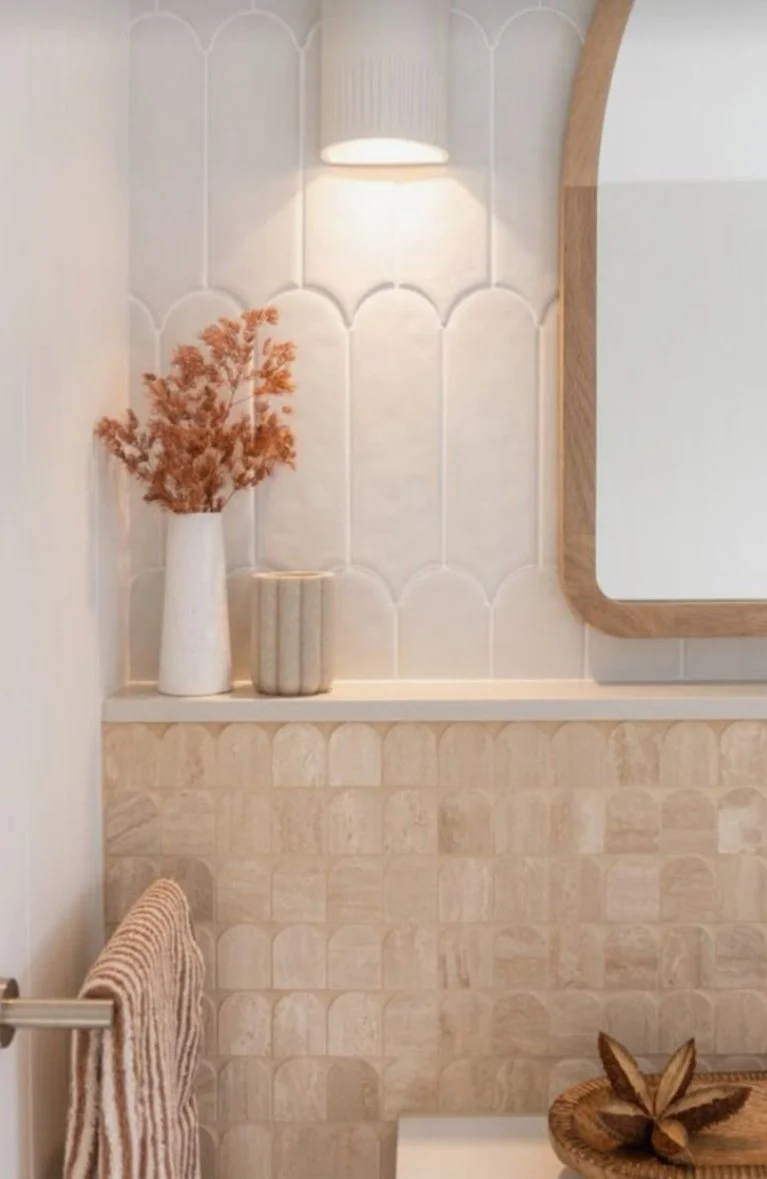
Curved Tile
Radius corners, curved tile transitions, and rounded edges soften lines and feel spa-like.
Curved transitions soften a bathroom’s hard geometry and immediately read more “spa” and less “builder grade.” Instead of sharp 90° edges at ledges, niches, and splash returns, use radius corners or quarter-round trims. The curve reduces visual noise, keeps grout lines from chipping, and makes cleaning easier—shampoos don’t crust on a razor edge. In small NYC baths, a single rounded outside corner can improve light flow and sight lines, so the room feels calmer and slightly larger. Keep curves intentional: one or two repeated gestures are better than many different arcs. Pair with matte finishes, honed stone, and warm metals so the curve feels like a quiet, premium detail rather than a theme.
Budget alternative: bullnose or quarter-round trim pieces on exposed tile edges instead of custom radius tiles.
Designer tip: match grout to tile tone (not to fixtures) to keep the curve visually “quiet” and upscale.

Natural, Warm Finishes
Warm woods (Walnut, White Oak) and cozy beiges create a serene, timeless palette.
Warm minimalism replaces stark white with creamy off-whites, textured plaster looks, oak or walnut accents, and honed stone. The goal isn’t empty—it’s edited: fewer competing lines, softer edges, and materials you want to touch. In New York apartments, this approach makes compact spaces feel welcoming instead of clinical, especially during long winters. Choose one dominant warm material (e.g., oak vanity), one quiet stone or stone-look porcelain, and a single brushed metal. Add tactile linen shower curtains or ribbed glass for diffusion. Keep the palette to three tones, then rely on layered lighting for depth. The effect photographs beautifully and ages well because it’s about feel, not fashion.
Budget alternative: stone-look porcelain for wet areas, reserve real stone for a small vanity top or shelf.
Designer tip: specify matte sealers and low-sheen paints (eggshell or matte) to avoid glare; warm materials + soft sheens = instant “quiet luxury.”
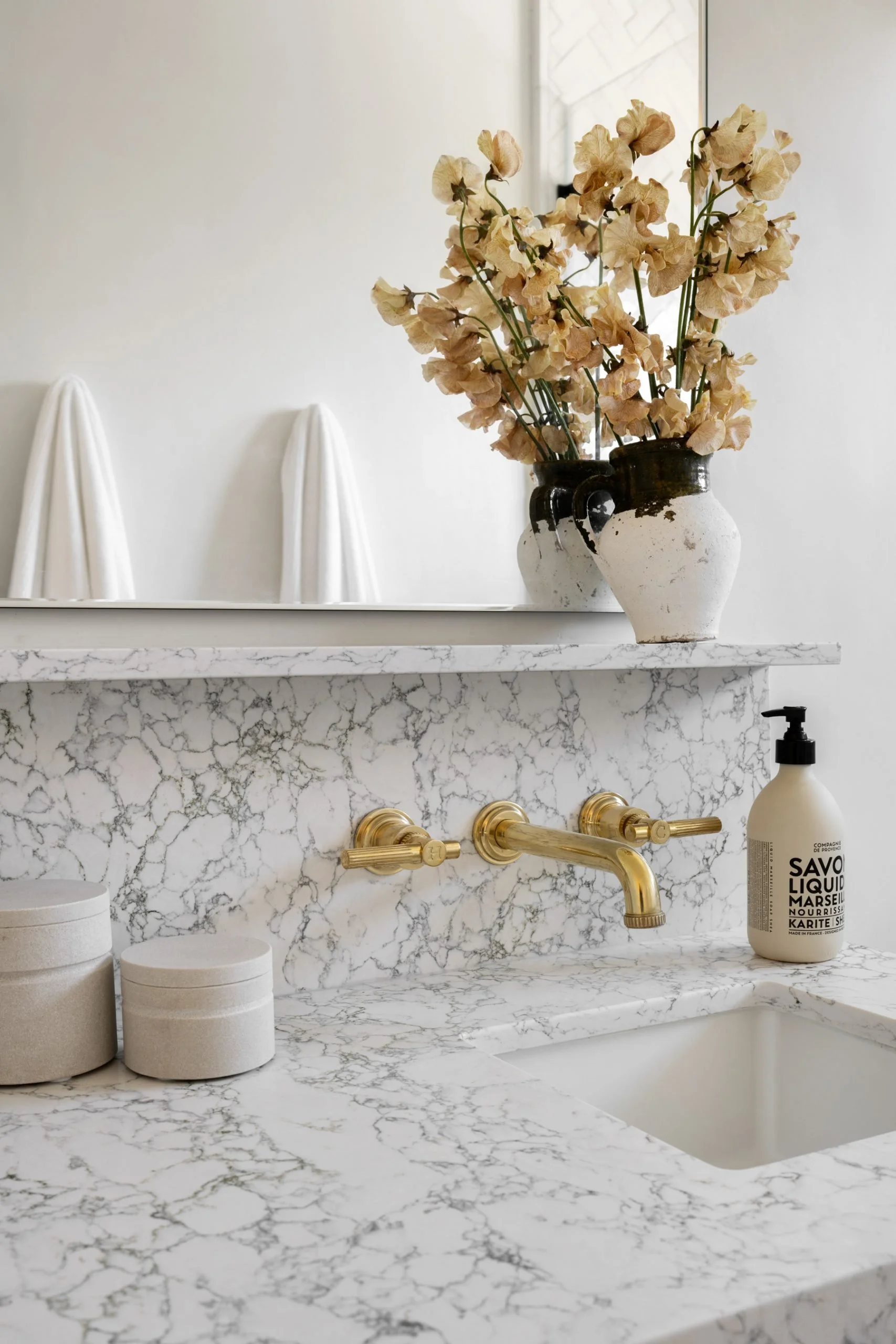
Shelf Above the Sink
A shallow ledge/shelf above the vanity backsplash for daily essentials, functional and visually clean.
A slim ledge (about 4–6") running above the vanity backsplash solves two NYC problems at once: daily items get a designated landing zone, and you avoid heavy wall cabinets over the sink. Build the ledge in the same stone or porcelain as the counter, or use tile with a bullnose. Keep outlets just above or integrated under the ledge to hide cords for electric toothbrushes. The strong horizontal line visually widens small rooms and doubles as a display for a single candle or bud vase. Waterproof the junction and slightly pitch the surface toward the sink to manage splashes. Continue the ledge into the shower niche height for a subtle, continuous datum—your eye reads one calm line instead of many small breaks.
Budget alternative: MDF or solid-surface ledge painted to match wall tile; protect with clear silicone at the seam.
Designer tip: limit objects to 3–5 pieces; clutter kills the elegance of the ledge.
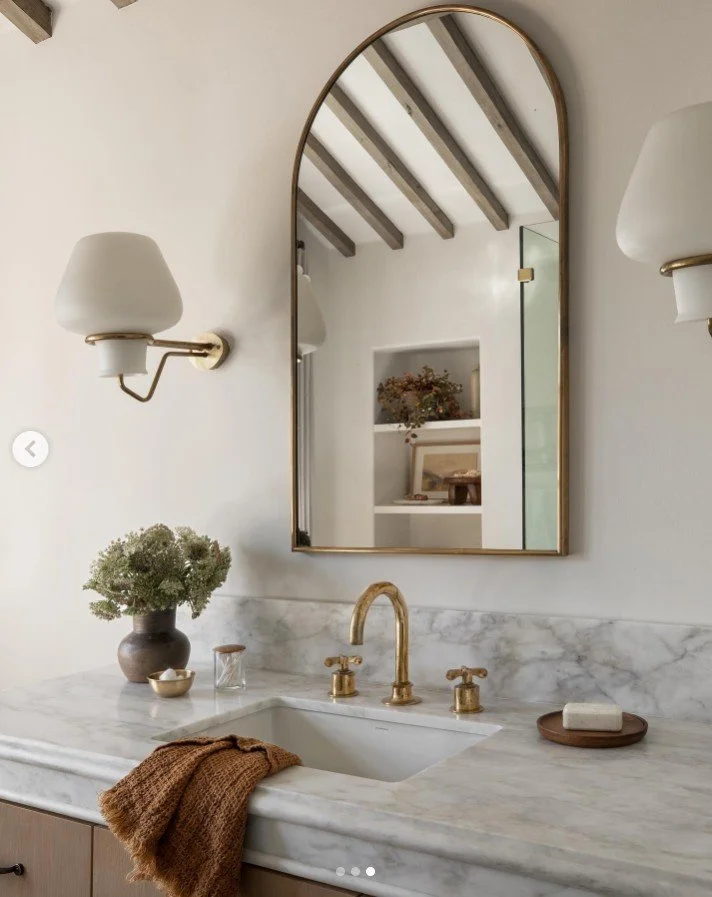
Organic Curves in Fixtures
Arched or round mirrors, dome/ellipse lighting, and oval tubs bring a gentle, calming geometry.
Introduce one or two organic curves—a pill-shaped mirror, a soft-oval sink, or a rounded vanity front—to offset rectilinear tile grids. Curves are kinder to faces at close range and reduce harsh reflections, which matters in tight NYC baths where you stand inches from the mirror. Choose substantial, rounded pulls and radius corners on shelves so hands meet soft edges. To avoid “decorative overload,” keep profiles thin and consistent across pieces; echo the same radius in mirror, stool, and sconce backplates. Curves pair beautifully with zellige or tumbled textures because both suggest hand-made warmth. Photograph the space from the doorway: you should see one graceful curve anchoring the view, not a crowded mix of shapes.
Budget alternative: swap a rectangle mirror for a pill-shape and add a curved sconce—instant softness without remodel.
Designer tip: maintain at least 2" from mirror edge to sconce backplate on both sides so the curve reads cleanly.
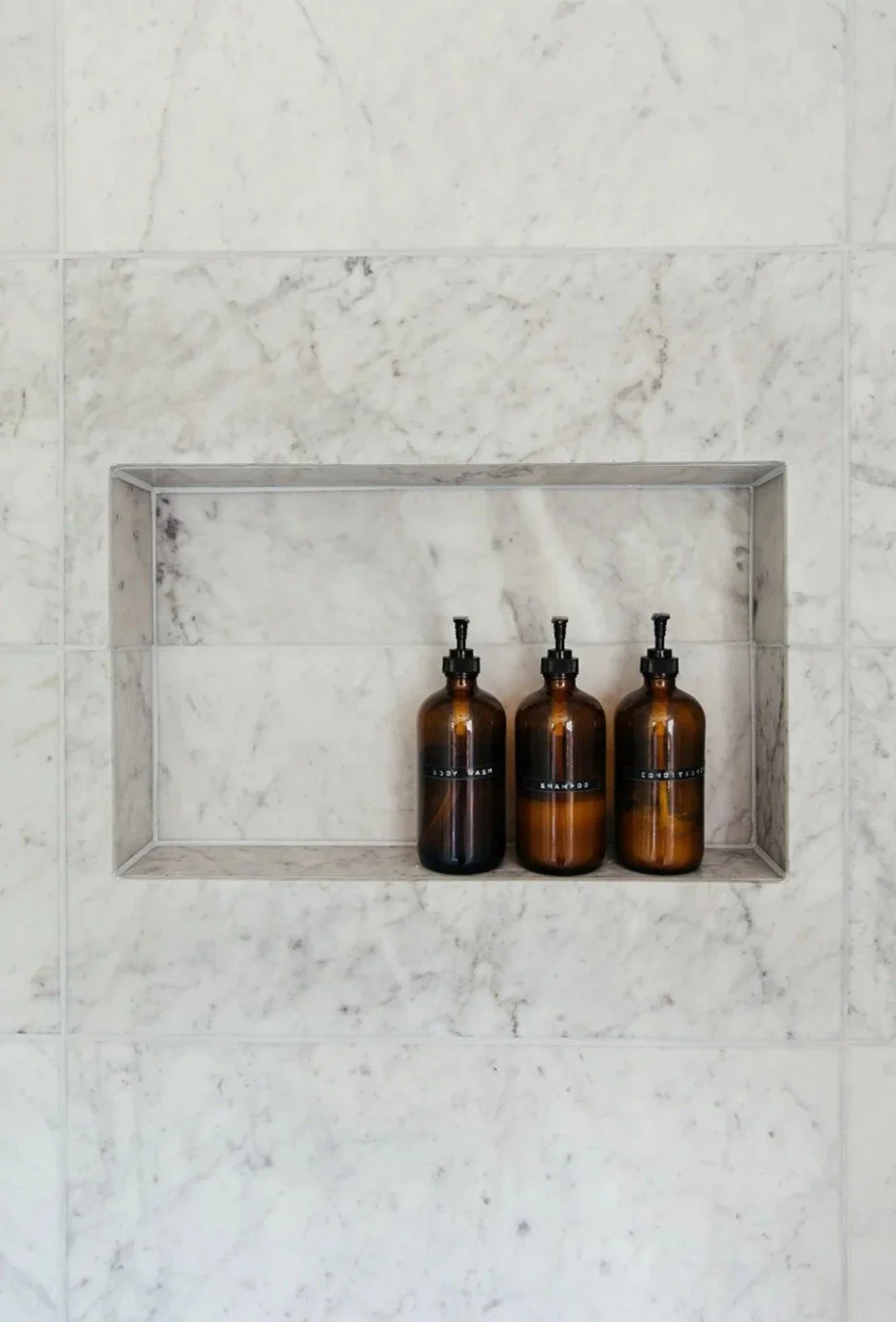
Built-In Niches
Integrated shower/tub niches (or vertical “stacked” niches) for a sleek, clutter-free look.
True luxury is not juggling bottles on the floor. Frame a full-width shower niche or a long ledge at about 42–48" AFF (above finished floor) so large shampoo bottles stand upright. In prewar NYC walls, depth can be limited—use a projecting stone shelf if you can’t recess fully. Line the niche in the same slab/porcelain as the curb or vanity top to reduce grout lines and make cleaning faster. Cap exposed edges with mitered tile or metal trim for durability. Consider a second, lower niche near the bench for shaving tools. Outside the shower, repeat storage logic with a mirrored medicine cabinet and drawers (not doors) at the vanity: drawers double usable volume in small footprints.
Budget alternative: surface-mounted shallow shelf in stone/solid surface that visually “reads” built-in.
Designer tip: slope niche sill 1/8" toward the shower to shed water and prevent product rings.
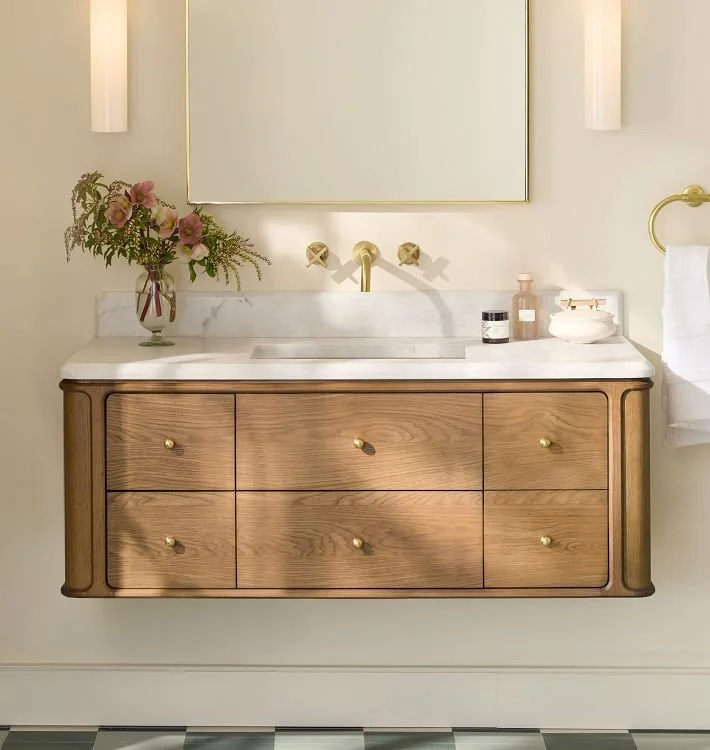
Floating Vanities
Open space under the vanity lightens the room, improves cleaning, and shows off floor tile.
A floating vanity creates the illusion of more floor, which is priceless in small NYC bathrooms. By lifting the cabinet 6–8" off the ground, you maintain a continuous floor line, improve cleaning, and allow for a soft toe-kick light that doubles as a nightlight. Use drawers for efficient storage and specify high-quality wall blocking—NYC gypsum and old plaster need real backing. Keep the countertop thin (¾–1¼") so the cabinet feels light rather than bulky, and run the backsplash up to the shelf ledge height for a strong horizontal datum. Visually pair floating vanities with curbless showers to emphasize flow.
Budget alternative: a standard cabinet with a dark recessed toe-kick mimics the floating look without wall mounting.
Designer tip: add a motion-sensor LED strip under the vanity (2700–3000K) for safe, flattering guidance at night.
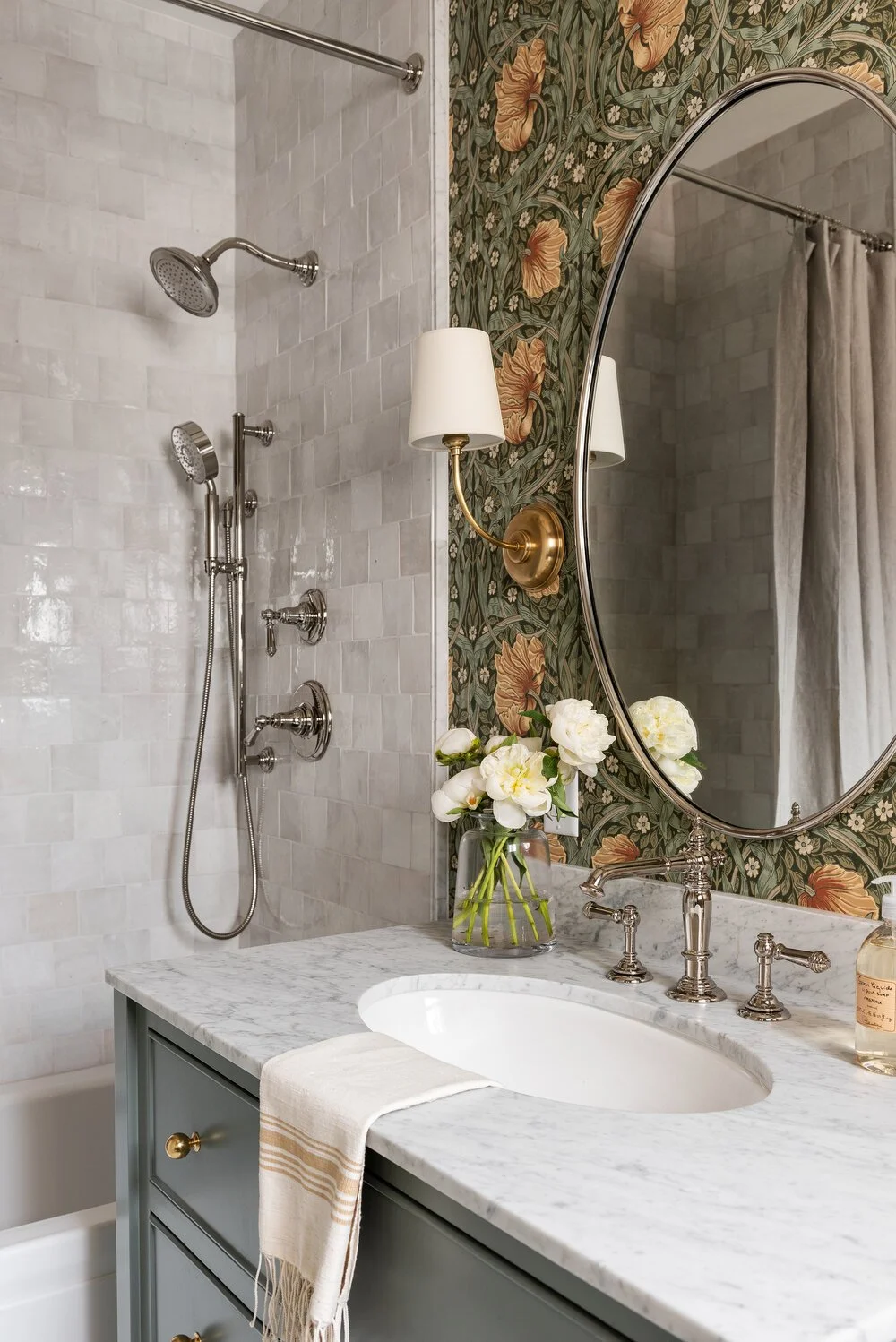
Mixed Metals (Brushed, Lived-In Finishes)
Mixing metals works when you do it on purpose and keep finishes cousins, not strangers. A common NYC pairing is brushed brass with warm nickel or stainless; black can ground the set as an accent. Choose one “hero” finish (usually faucets) and repeat it at least three times; use the secondary finish for hardware or lighting. Brushed and living finishes wear gracefully in urban use, hiding fingerprints and water spots better than polished chrome. Tie metals together with temperature: warm metals complement warm stones and woods. Photograph under your actual lighting—some brasses swing green; adjust selection before ordering.
Budget alternative: keep plumbing in one finish for cost control; mix only hardware/lighting for the layered look.
Designer tip: order samples from the same vendor family when possible—cross-brand “brass” rarely matches.

Sustainable, Practical Choices (That Don’t Feel “Eco”)
Real sustainability is about long-lived materials and water/air quality that feel good daily. Specify WaterSense fixtures to cut consumption without sacrificing pressure, low-VOC paints and sealers to reduce odors in small NYC baths, and porcelain stone-looks in wet zones to avoid maintenance headaches. Choose timeless, repairable pieces over fast fashion trends: a solid vanity box with replaceable fronts, a stone or porcelain top that can be refinished, and lighting with standard lamps, not proprietary modules. Keep grout lines minimal and accessible—clean bathrooms get remodeled less often.
Budget alternative: upgrade one layer that touches skin daily (shower system or lighting) and keep others durable and modest.
Designer tip: add a quiet, efficient exhaust fan on a humidity sensor—air quality is a trend that never dates.
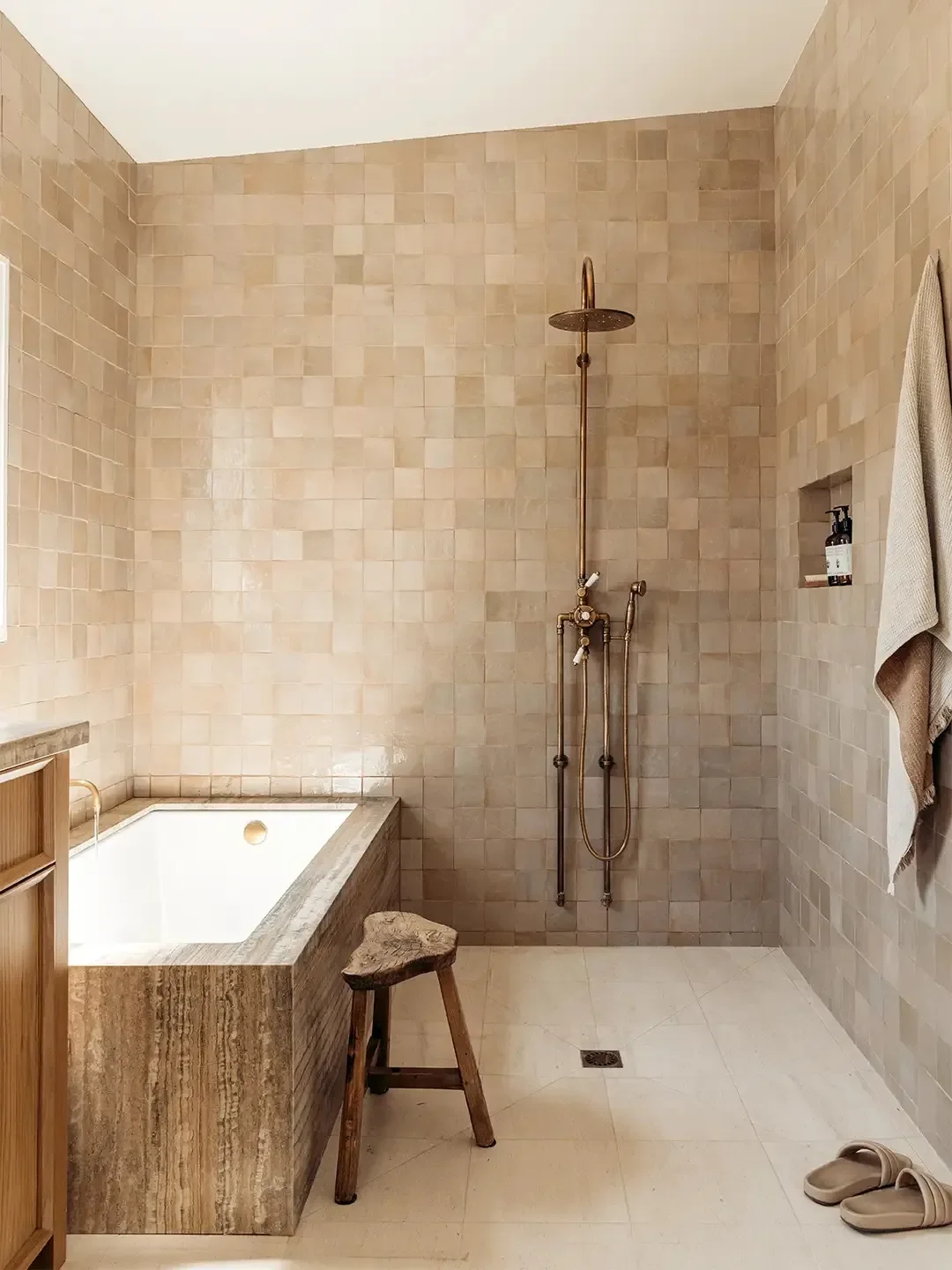
Curbless Showers & Linear Drains
Curbless entries extend the floor plane into the shower, making tight bathrooms feel larger and more accessible—critical in NYC co-ops and condos where every inch counts. A linear drain against the back wall or at the entry allows a single-direction slope and large-format floor tiles with minimal cuts. Waterproofing and slope are non-negotiable: specify a reputable system and coordinate early with the contractor and building rules. Use a fixed glass panel instead of a swinging door in narrow rooms; you keep steam and sight lines without conflict at the toilet. Continue floor tile into the shower for visual unity, and run wall tile full height to avoid a busy mid-line.
Budget alternative: low-profile curb at 2" high with the same floor tile for a nearly flush look.
Designer tip: align grout joints to the linear drain length so lines don’t “die” into metal randomly.

Layered Lighting at 2700K–3000K
Great baths are lit like small sets: ambient, task, and accent—on dimmers. Start with a soft ambient source (ceiling or cove), add glare-free task lighting at face height on both sides of the mirror, then a low accent (toe-kick or niche) for depth at night. In NYC homes with tiny or no windows, light quality decides whether stone reads expensive or flat. Stick to 2700K–3000K and CRI 90+ for flattering skin tones and accurate finishes. Avoid a single downlight over the sink—it creates harsh under-eye shadows. Keep fixtures visually quiet and let materials shine.
Budget alternative: replace one overhead with two vertical mirror sconces and add a plug-in LED strip under the vanity.
Designer tip: label scenes (GET READY / WIND DOWN) on universal dimmers to make lighting a daily ritual.
FAQ:
What are the top bathroom trends in 2025?
Warm minimalism, natural stone or porcelain stone-looks, spa-level showers, curbless entries with linear drains, layered 2700K–3000K lighting, and brushed mixed-metal finishes.
Are curbless showers practical in small NYC apartments?
Yes—when properly sloped with a linear drain and continuous waterproofing. They visually expand the floor and improve accessibility; large-format tiles with tight grout lines enhance the effect.
Which finishes last longer—polished or brushed?
Brushed and “living” finishes hide fingerprints and water spots better than polished chrome and age gracefully in urban use.
How warm should bathroom lighting be?
Aim for 2700K–3000K with dimming. Combine ambient, task at the mirror, and a low accent light for nighttime.
How do I get a spa feel on a budget?
Prioritize the shower system and lighting; use stone-look porcelain in wet zones and keep grout minimal for easy upkeep.