Down to Earth Interior Design: Calm, Honest, Livable

When I think about a down to earth interior, I imagine spaces that feel calm and honest — no shouting colors, no trendy gimmicks, just beautiful, functional rooms that quietly support everyday life. The images from this project capture exactly that mood: warm light, natural textures, simple shapes, and pieces that look like they belong together without trying too hard.
Let me walk you through the spaces and the design decisions behind them.
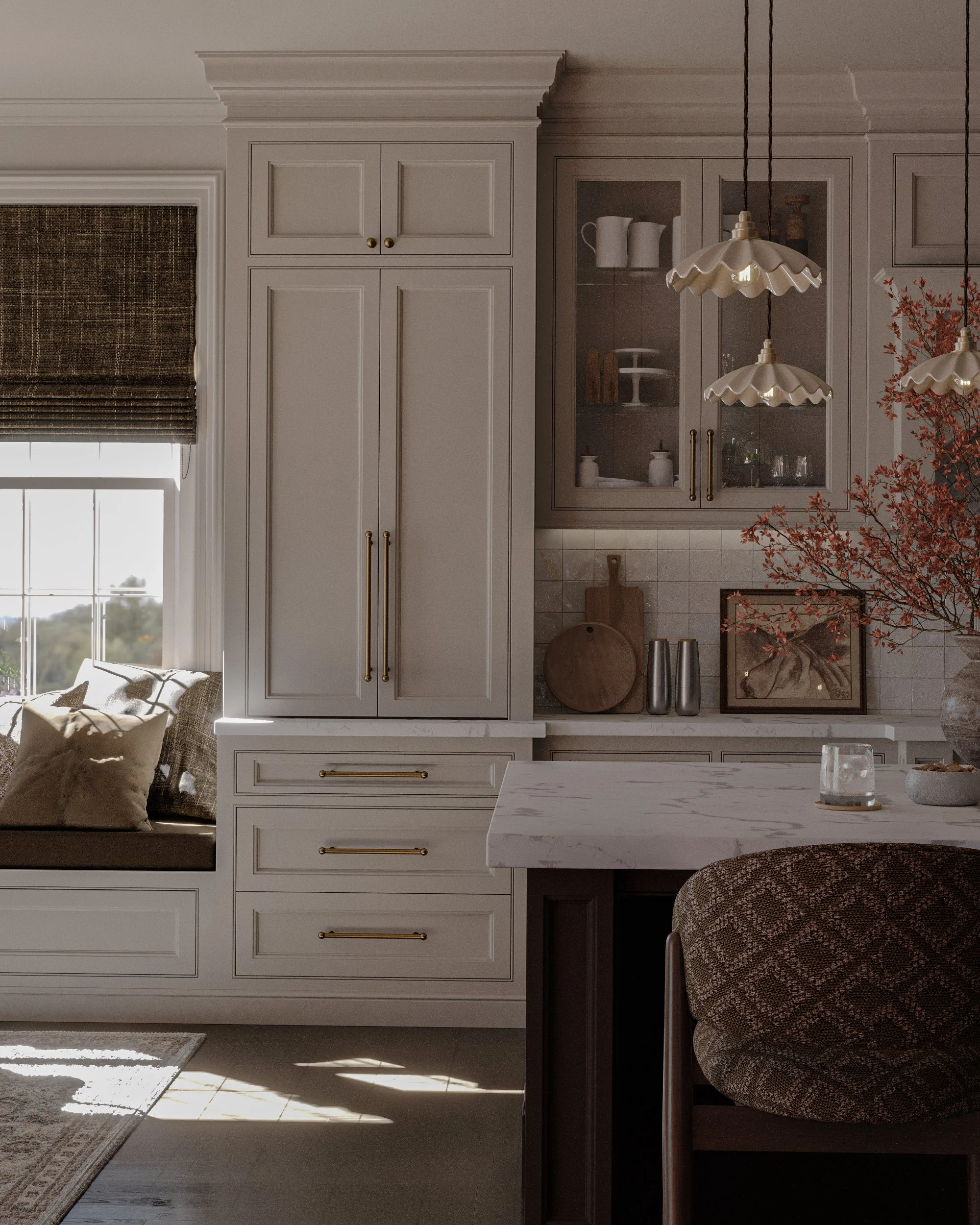
1. The Kitchen: Classic, Warm, and Quietly Luxurious
In the kitchen, everything starts with the cabinetry. Soft, warm-toned doors with simple paneling create a timeless backdrop. The crown molding and tall built-in pantry add a sense of architecture and permanence, while the slim brass hardware brings a subtle glow without feeling flashy.
A few key elements make this kitchen feel down to earth:
Warm neutrals instead of bright whites
The cabinets and walls are not a stark white but a gentle, creamy tone that feels cozy, especially in natural light.Natural textures at the window seat
The roman shade in a textured, earthy fabric and the layered pillows at the window seat make the built-in feel like a place to actually sit with a book or a cup of tea, not just something “for the photo.”Honest materials and simple styling
On the countertop, you see just a few everyday objects: wooden cutting boards, simple ceramics, a framed piece of art. They add character but are still practical and easy to live with.Soft curves in lighting and furniture
The scalloped pendant lights above the island and the curved barstool backs introduce a gentle, feminine line. They soften all the straight cabinetry lines and make the room feel more inviting.
This kitchen is not about showing off; it’s about feeling good when you walk in every morning.
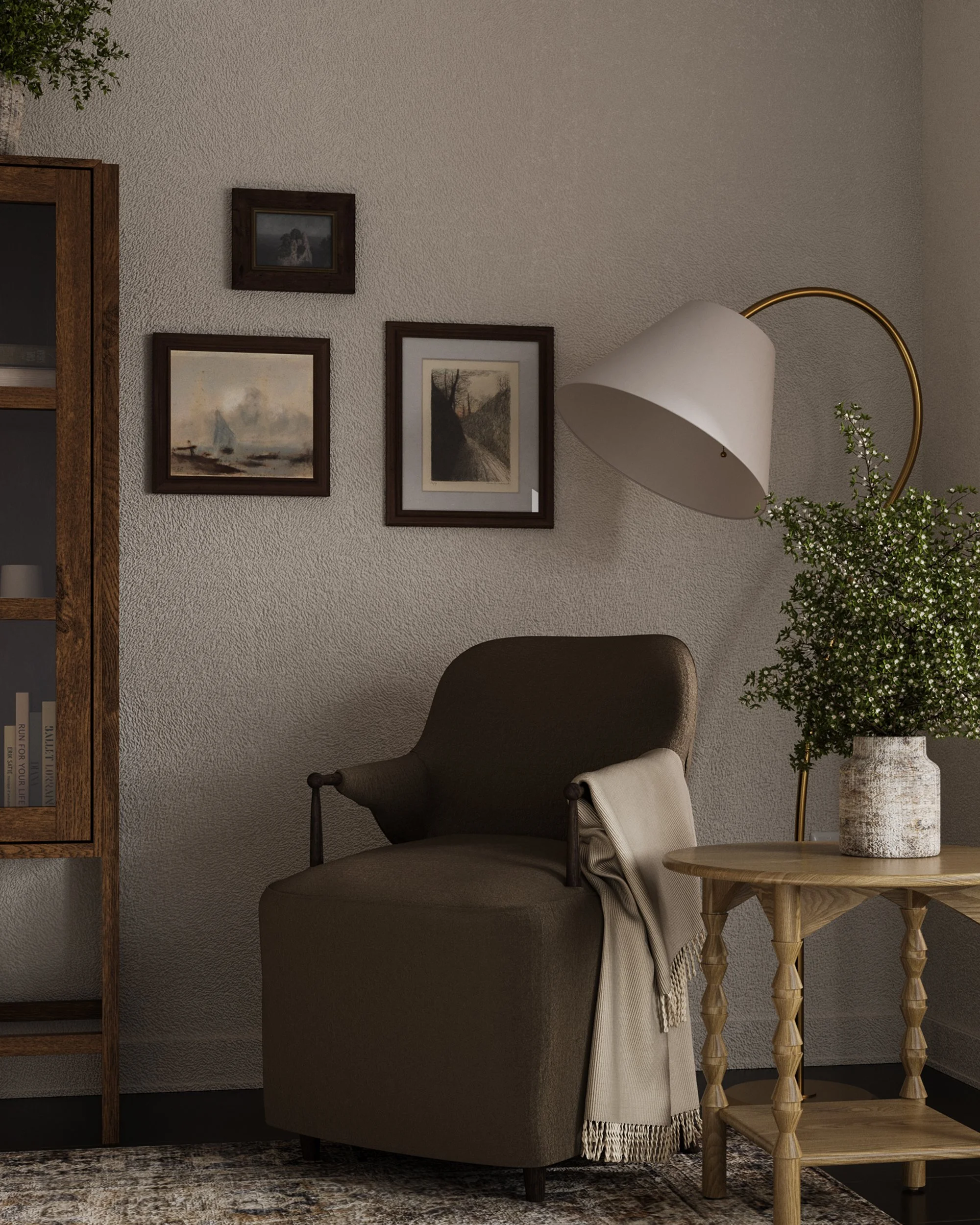
2. The Reading Corner: A Small Space with a Big Mood
The second image is all about creating a quiet little moment at home — a place where you can sit down, exhale, and be with your thoughts.
What makes this corner feel grounded:
Deeper, earthy upholstery
The armchair is a rich, warm brown that anchors the space and hides everyday wear. Its shape is simple and comfortable, not overly sculptural or fragile.Layered, moody art
The small gallery wall above the chair uses muted tones and soft, atmospheric images. Nothing is too bright or graphic; instead, it feels like old memories and landscapes.Warm wood and turned details
The side table and cabinet are in a natural, medium wood tone. The turned legs on the table add a handmade, traditional touch without being too ornate.Soft lighting and greenery
The floor lamp with its curved brass arm and simple shade gives a cozy, focused light — perfect for reading. A pot of greenery adds life and breaks up all the browns and beiges in a very natural way.
This is a good example of how even a small corner can feel like a complete, intentional space.
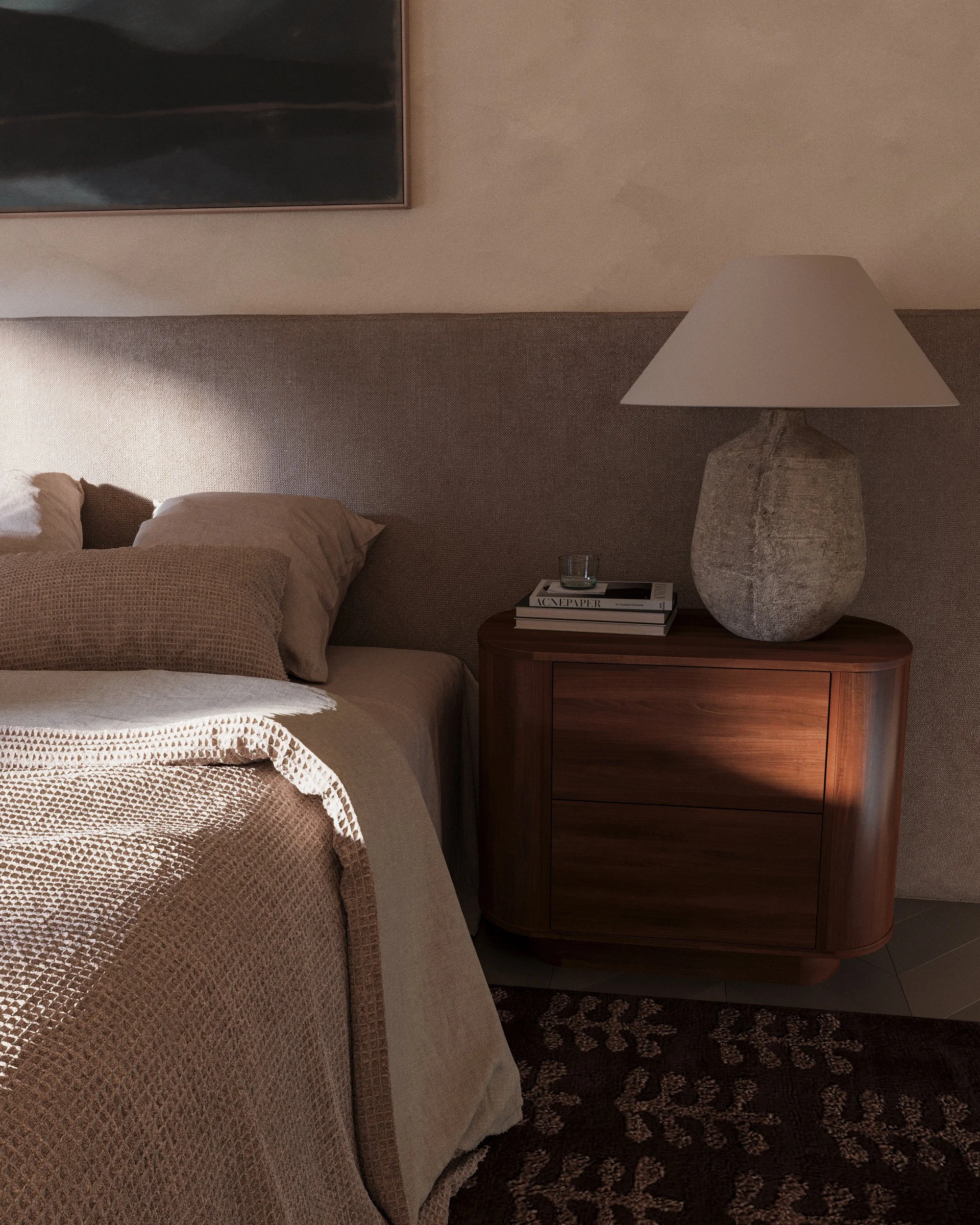
3. The Bedroom: Simple, Cocoon-Like Comfort
The bedroom design is all about softness and warmth. The palette stays in the same family of earthy neutrals, but the focus here is on texture and light.
Details that create the down to earth feeling:
Full-width upholstered headboard
The headboard runs across the wall, wrapped in a natural, textured fabric. It feels cozy and quiet, almost like a soft wall that hugs the room.Layered bedding in natural fabrics
The bed is dressed with a mix of linen and a chunky woven blanket — nothing shiny, nothing stiff. It looks like a place you can actually sleep, nap, and live in.Rounded wood nightstand
The curves of the nightstand add softness and safety (no sharp corners), and the warm wood tone keeps the room feeling grounded and solid.Stone-like lamp and minimal decor
The lamp has a ceramic, slightly rough base, echoing the natural textures of stone. On the nightstand, just a couple of books and a glass: enough to feel personal, but not cluttered.Play of shadows and light
Natural light and shadow are part of the design. The way the light hits the textiles and wall makes the room feel alive throughout the day without needing loud colors.
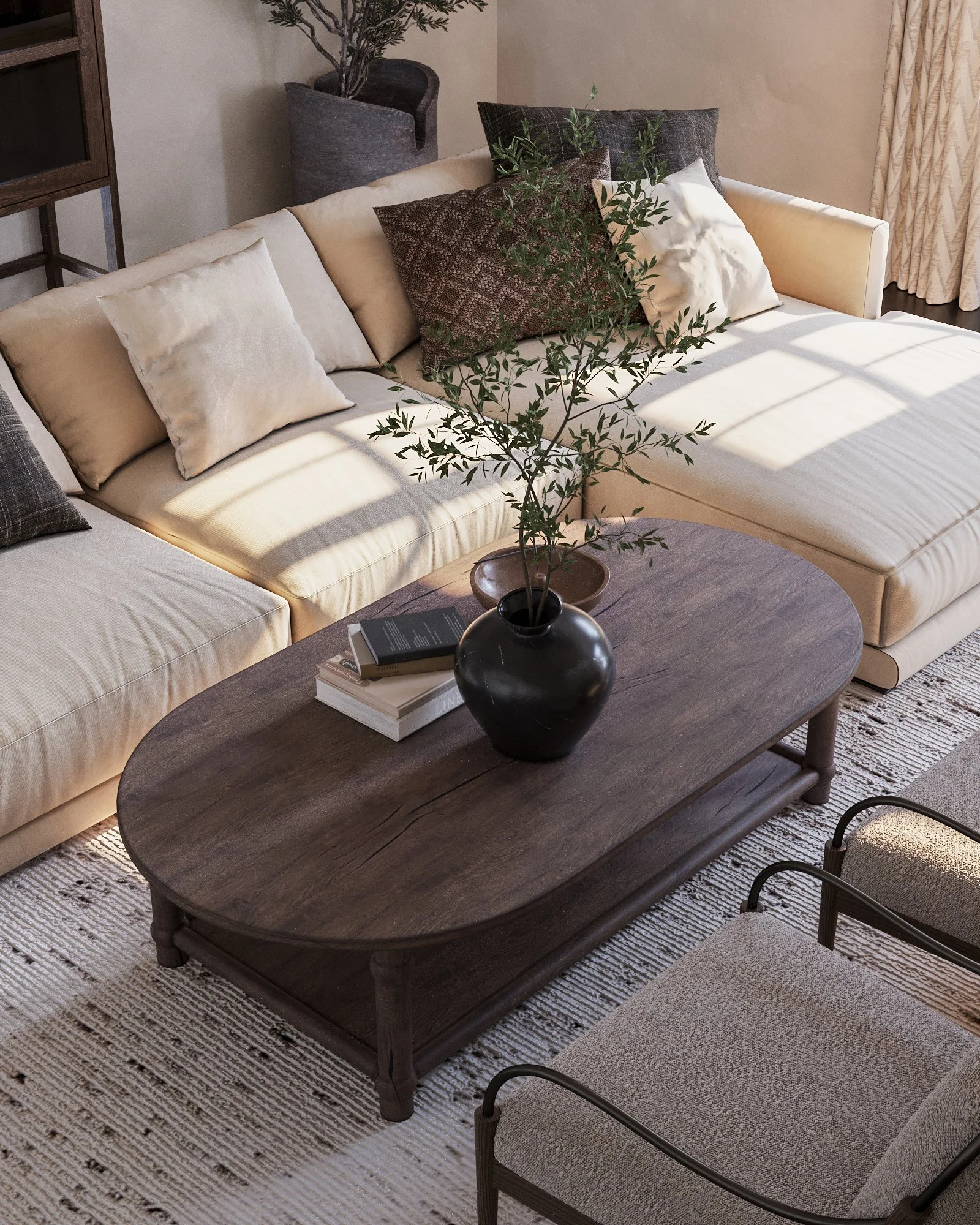
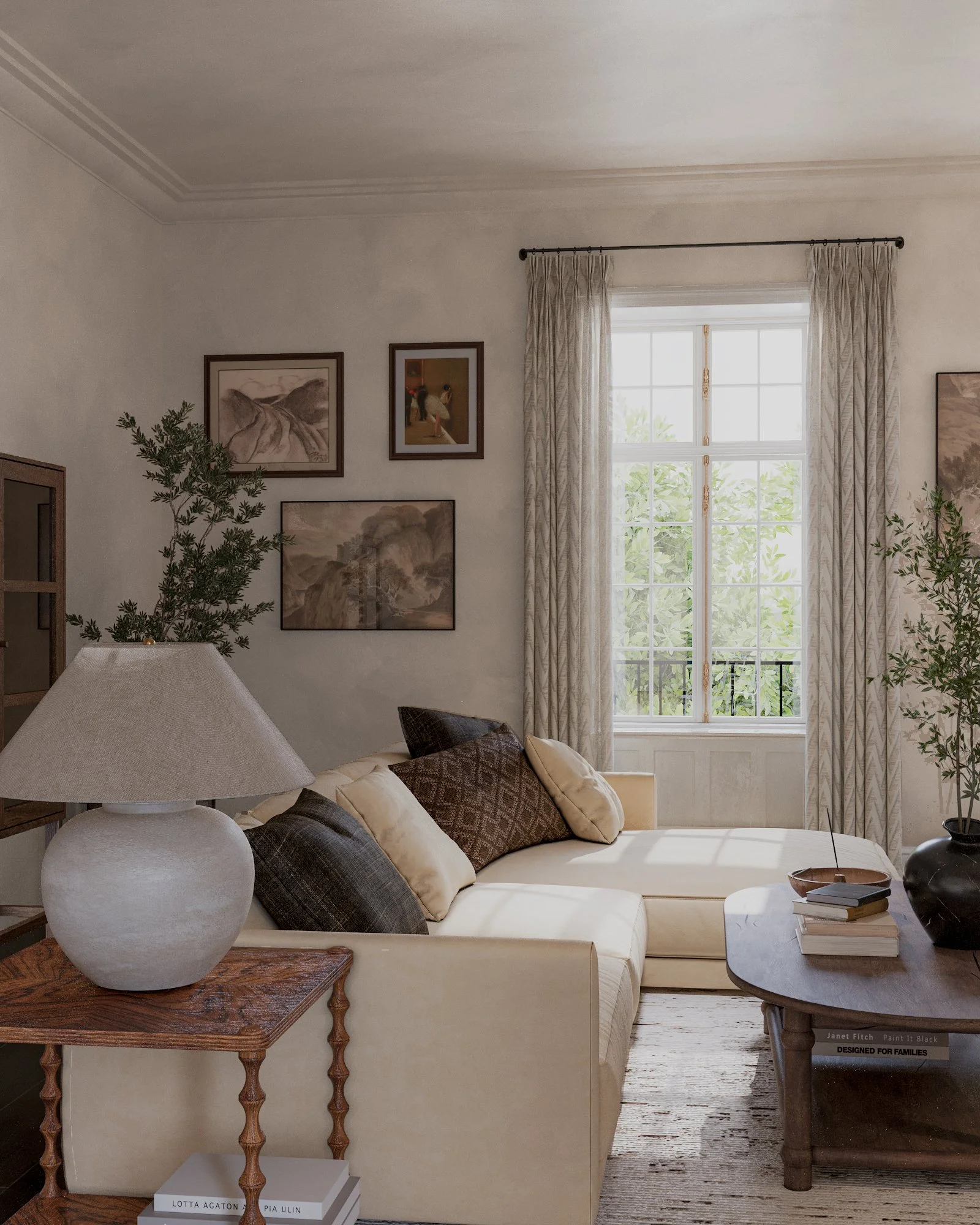
4. The Living Room: A Relaxed, Grounded Gathering Space
The living room continues the same down to earth feeling with a low, deep sectional in a warm sand color. It feels inviting and lived-in, the kind of sofa you actually want to curl up on with family or stretch out on in the afternoon light. Layered pillows in darker browns and subtle patterns add depth and a bit of quiet contrast while still staying within the same earthy palette.
At the center of the room is a solid, oval wood coffee table with a soft, rounded edge. Its weight grounds the space, but the curved shape keeps it from feeling heavy. Styling stays simple: a black ceramic vase with a loose branch, a few loved books, and a small wooden bowl. Nothing is overly arranged; it looks like a real table in a real home.
Underfoot, a textured neutral rug ties everything together and softens the room. The fabric drapery, with its understated pattern, frames the window and filters the natural light without stealing attention. On the walls, moody artwork in warm tones and simple frames adds personality and a slightly nostalgic feeling, like collected pieces from travels and favorite places.
The result is a living room that feels calm, approachable, and grounded. It’s not a showpiece—it’s a space designed for everyday life: reading, talking, playing with kids, drinking coffee, and simply being at home.
What “Down to Earth” Means in Practice
From these spaces, a few principles repeat:
Warm, muted palette
Think soft beiges, taupes, warm whites, browns, and gentle greys. Color comes in quietly through art, greenery, and small accents, not through large, loud statements.Natural materials and texture
Wood, linen, wool, stone, ceramic, woven fabrics — all the things that feel good to the touch. Texture is what keeps a neutral interior from feeling flat.Soft shapes and rounded edges
Curved lamps, rounded furniture corners, scalloped lighting, and upholstered pieces help soften the geometry of the architecture.Simple, meaningful styling
Fewer objects, but chosen thoughtfully: favorite books, a piece of art, a handmade vase, a well-used cutting board. Styling should feel personal, not staged.Comfort first
A chair you actually want to sit in, a window seat where you can really stretch out, a bed that invites rest — aesthetics and comfort go together.
Bringing This Style into Your Home
If you feel drawn to these images and to this “down to earth” mood, start small:
Replace one bright or glossy element with something in a softer, natural finish.
Add a textured throw or cushion in warm neutrals.
Simplify your surfaces and keep only what you love and use.
Introduce a little greenery and a warm lamp in a forgotten corner.
Over time, your home will begin to feel calmer, warmer, and more connected to you and your everyday life — and that is the heart of down to earth design.

If you’d like help creating this kind of atmosphere in your own kitchen, living room, or bedroom, I’d be happy to design a custom, grounded space tailored to your family and lifestyle.